
In many restaurants outside Italy, carbonara arrives covered in a cream sauce, sometimes with smoked bacon bits and garlic. That is not carbonara. The authentic Italian carbonara recipe contains neither cream nor garlic, and that is exactly what makes it better.
This recipe comes from Rome. It relies on four well chosen ingredients, carefully cooked pasta and one precise move when you bind the sauce off the heat. Follow the proportions and cooking time below, and the result will be creamy without a single drop of cream.
This traditional carbonara is made with guanciale, egg yolks, pecorino romano and black pepper, serves 4 and takes 30 minutes.
The three rules for success: well browned, crispy guanciale, a sauce bound off the heat with the pasta cooking water, and never any cream.
Ingredients
- 400 g spaghetti (or rigatoni)
- 200 g guanciale cut into small strips (or pancetta if unavailable)
- 4 egg yolks
- 1 whole egg
- 100 g freshly grated pecorino romano, plus a little extra for serving
- Freshly ground black pepper, generously
- Salt for the cooking water
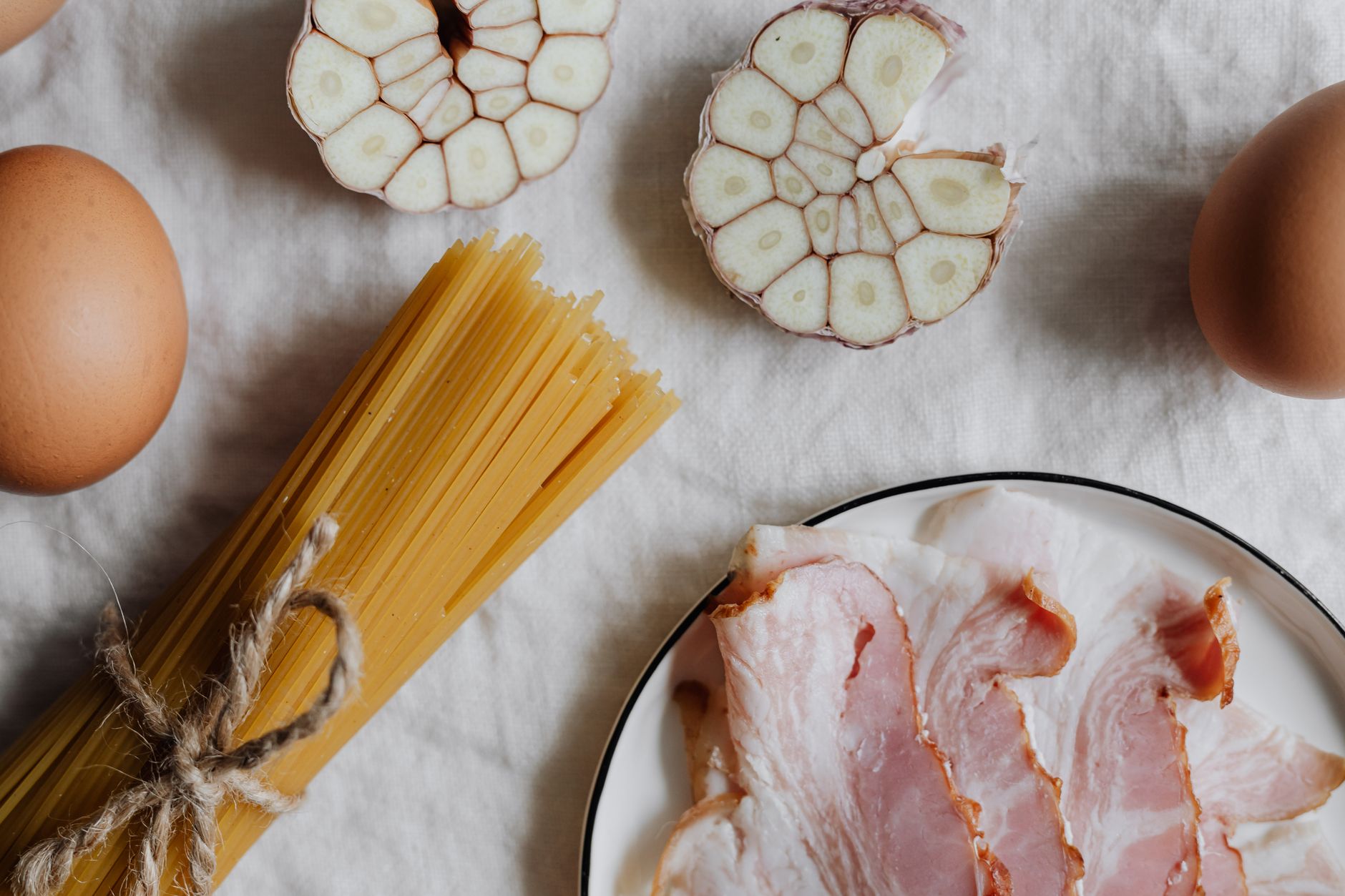
Step by step recipe
- Cook the pasta. Bring a large pot of salted water to the boil and cook the spaghetti according to the time on the package, slightly less so they stay firm.
- Prepare the guanciale. Meanwhile, cut the guanciale into small, even strips.
- Brown the guanciale. Fry the guanciale without any added fat in a large pan over medium heat until golden and crispy. Do not discard the fat it releases.
- Make the sauce. In a bowl, whisk the egg yolks and the whole egg with the grated pecorino and a good amount of black pepper until you get a smooth paste.
- Save the cooking water. Just before draining the pasta, scoop out a ladle of cooking water and set it aside.
- Toss off the heat. Drain the spaghetti and add them straight to the guanciale pan, off the heat. Toss to coat them well.
- Bind the sauce. Add the egg and pecorino mixture, still off the heat, stirring quickly and pouring in a little cooking water to bind the sauce and make it creamy.
- Serve. Serve immediately, with a little extra pecorino and black pepper.
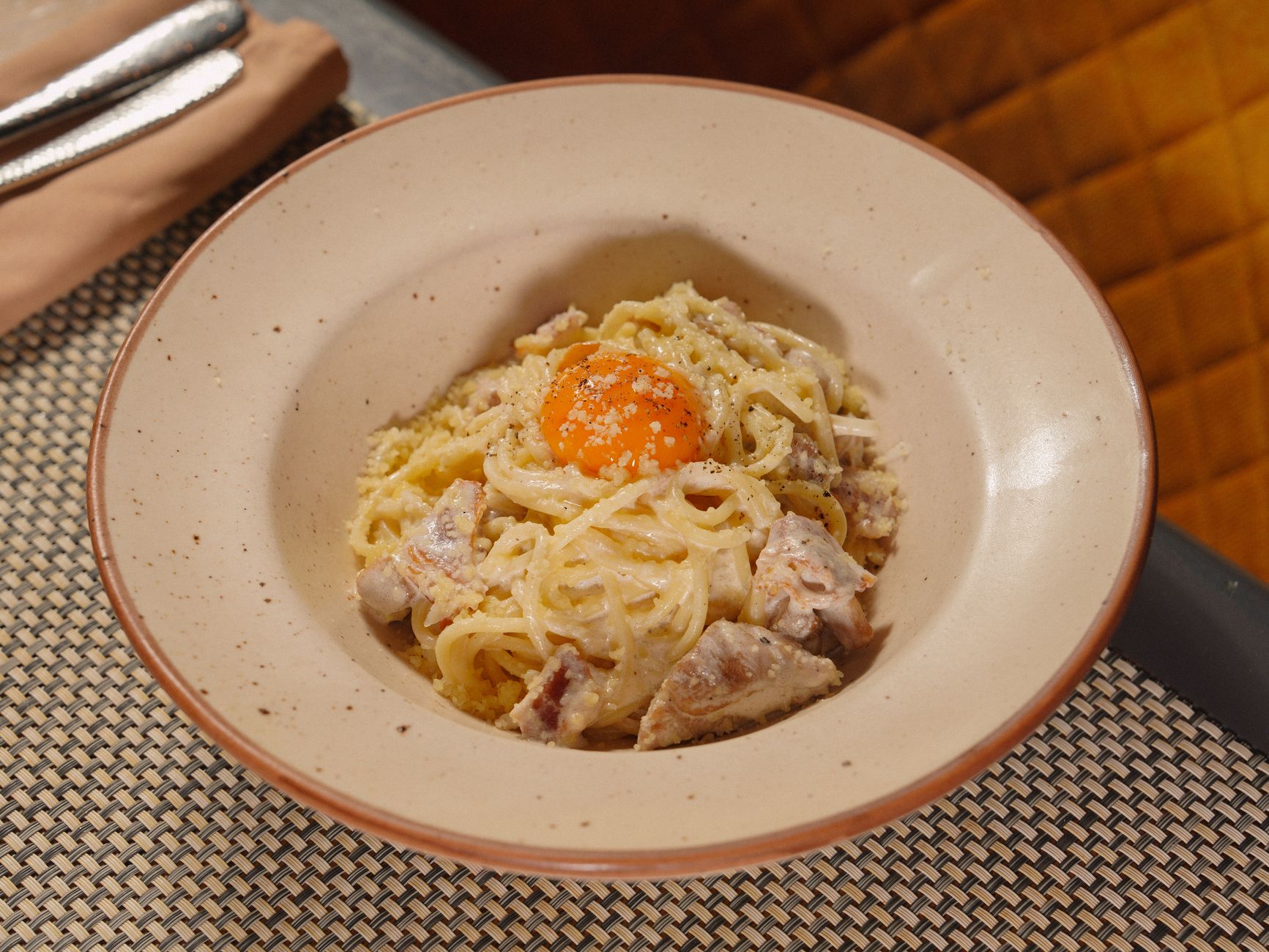
Chef's tip
The secret to a successful carbonara is temperature. If you pour the egg and pecorino mixture over pasta that is too hot, or while the pan is still on the heat, the eggs cook and turn lumpy, like an omelette. Always take the pan off the heat before adding the eggs, and rely on the residual heat of the pasta and the cooking water to bind the sauce without cooking it. The starch in that water is what makes the sauce silky, not cream.
Variations
- Pancetta instead of guanciale. It gives a slightly leaner, less aromatic result, but works well if you cannot find guanciale.
- Rigatoni or bucatini. These short or ridged pastas hold the sauce well, just like spaghetti.
- Mixed pecorino and parmesan. For a slightly less salty flavor, replace half the pecorino with parmesan.
- Pepper cracked at the last minute. It releases more aroma than pepper ground in advance.
Frequently asked questions
Can you replace guanciale with bacon or pancetta?
Pancetta is the closest substitute, with a slightly milder flavor. Smoked bacon changes the result more, since smoking is not part of the traditional recipe. Either way, fry it without added fat so it releases its own fat and turns crispy.
How do you keep the eggs from turning into an omelette?
Always take the pan off the heat before adding the egg and pecorino mixture. Stir quickly while adding a little pasta cooking water, whose starch helps bind the sauce. The residual heat is enough to make it creamy without scrambling the eggs.
Can you keep leftover carbonara?
Yes, in an airtight container in the fridge for one day, no longer. Reheat over very low heat in a pan, adding a little water to loosen the sauce, because the eggs handle strong heat very poorly and may curdle.
In the kitchen with the right apron
In front of a pan of sizzling guanciale, an apron keeps grease splatters off your clothes while you toss quickly off the heat. Discover our Italian apron or our full range of kitchen aprons to cook this recipe without a second thought.
Le Tablier du Chef, kitchen and professional aprons, online.


