
This pan-seared salmon fillet takes 10 minutes of prep and 12 minutes of cooking, 22 minutes in total, and serves 4. The creamy lemon and dill sauce is made in the same pan while the fish rests.
Two rules make this salmon in sauce recipe a success: sear the fish skin side down without moving it to get a golden crust, and let the cream simmer gently over low heat without ever letting it boil hard, or it may split.
Overcooked, dry salmon that crumbles under your fork: it's the most common mistake with this fish, and just two extra minutes are enough to cause it. The good news is that there's a simple method for a pan-seared salmon fillet that stays tender at the center, coated in a creamy lemon and dill sauce.
This recipe takes barely twenty minutes and works just as well for a weeknight meal as for a slightly more special dinner. While you cook, a good kitchen apron keeps cream splatters away as the sauce reduces.
Ingredients
- 4 salmon fillets (150 g each, skin on or skinless)
- Salt, freshly ground pepper
- 1 tablespoon olive oil
- 20 g butter
- 1 shallot
- 20 cl whole liquid cream
- 1 lemon (zest and juice)
- 3 sprigs fresh dill (or flat-leaf parsley)
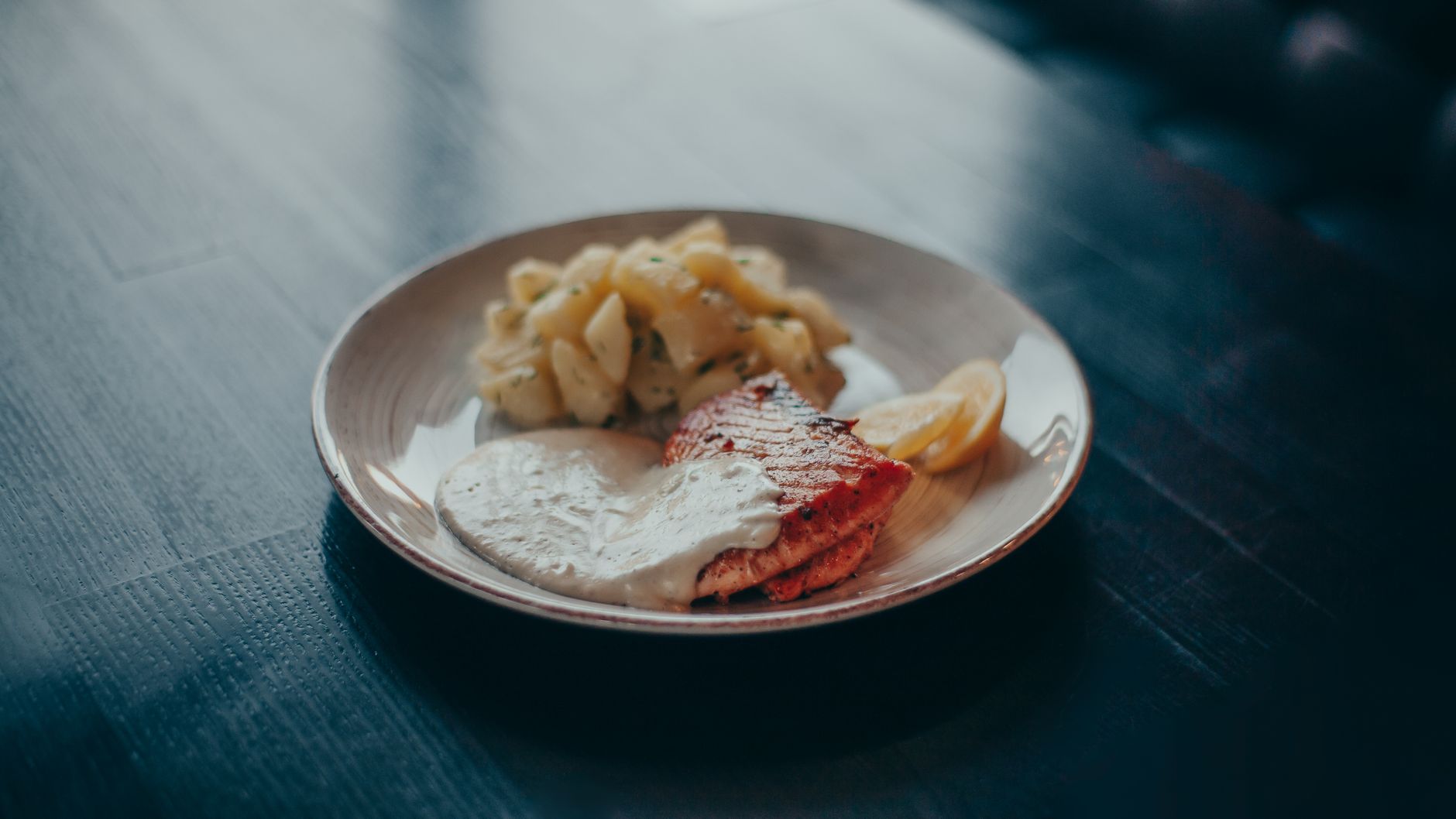
Step-by-step recipe
- Prepare the fish. Take the salmon out of the fridge 10 minutes before cooking, pat it dry with paper towels, then season both sides with salt and pepper.
- Sear skin side down. Heat the olive oil in a frying pan over medium-high heat. Place the fillets skin side down in the pan and cook for 4 to 5 minutes without moving them, until the skin is crisp.
- Finish cooking. Turn the fillets over and cook for another 3 to 4 minutes, depending on thickness. Remove from the pan and keep warm under a sheet of aluminum foil.
- Sweat the shallot. In the same pan, lower the heat and add the butter and the finely sliced shallot. Let it sweat for 2 minutes without browning.
- Make the sauce. Pour in the liquid cream, lemon zest and lemon juice. Simmer for 3 minutes over low heat so the sauce thickens slightly.
- Season. Add salt and pepper, then stir in the chopped dill.
- Reheat and serve. Return the salmon fillets to the sauce for one minute to warm them through, then serve right away, coated in sauce.

Chef's tip
To check that the salmon is perfectly cooked without drying it out, simply press the center of the fillet lightly with the back of a fork. If it resists a little while staying soft, it's ready. The flesh should be pink and barely translucent at the center, never completely opaque. One more thing to watch: once the cream is added, the sauce should no longer come to a full boil. Heat that is too high makes it split, and it turns grainy instead of smooth.
Two other ways to cook this salmon
- In the oven: place the seasoned fillets on a baking sheet, drizzle with oil and lemon juice, and bake for 15 to 18 minutes at 180 degrees, depending on thickness. Make the creamy sauce separately in a saucepan while the fish bakes.
- En papillote: wrap each fillet with julienned zucchini and carrot, a slice of lemon and a small knob of butter, seal the paper tightly and bake for 15 minutes at 200 degrees. The fish stays very tender and fragrant, with no need to keep an eye on it.
- Wholegrain mustard sauce: replace the lemon with a tablespoon of wholegrain mustard for a bolder sauce that pairs well with oven-baked salmon.
- With melted leeks: replace the shallot with a sliced leek, softened for 8 minutes before adding the cream, for a heartier version.
Frequently asked questions
How do I know when salmon is perfectly cooked?
The flesh should turn pale pink and slightly translucent at the center, without looking glossy or raw. It flakes easily with a fork while staying soft when pressed. For more precision, a kitchen thermometer will show an ideal medium-rare doneness between 50 and 52 degrees at the center of the fillet.
Can I replace the liquid cream with thick crème fraîche in this salmon sauce?
Yes, thick crème fraîche works just as well and gives a slightly richer sauce. Simply add a tablespoon of water or fish stock as you pour it in to get the same coating texture as with whole liquid cream.
Does salmon en papillote take longer to cook than pan-seared salmon?
A little, yes. Allow about 15 minutes in the oven compared with 7 to 9 minutes in the pan for a fillet of the same thickness, because the steam inside the parcel takes a few minutes to heat up before it gently cooks the fish.
Cooking with the right apron
Between hot oil crackling as you sear and cream simmering as it reduces, this kind of recipe splatters easily: a well-cut kitchen apron protects your clothes without getting in the way at the stove. It's also the kind of accessory you'll appreciate for all your everyday sauces and frying, not just for fish, and you'll find it in our kitchen apron collection.
Le Tablier du Chef, kitchen and workwear aprons, online.


