
Every autumn, Swiss chard takes over the market stalls, with its large green leaves and its white or red stalks depending on the variety. Many people walk past without knowing what to do with it, or simply throw it away for lack of ideas.
Here is a recipe for Swiss chard gratin that makes the most of both parts of the vegetable: tender stalks and leaves wilted in the pan, under a lightly nutmeg-scented béchamel. At the end of the article, you will find two other quicker ways to cook Swiss chard, so you can vary it to suit your mood.
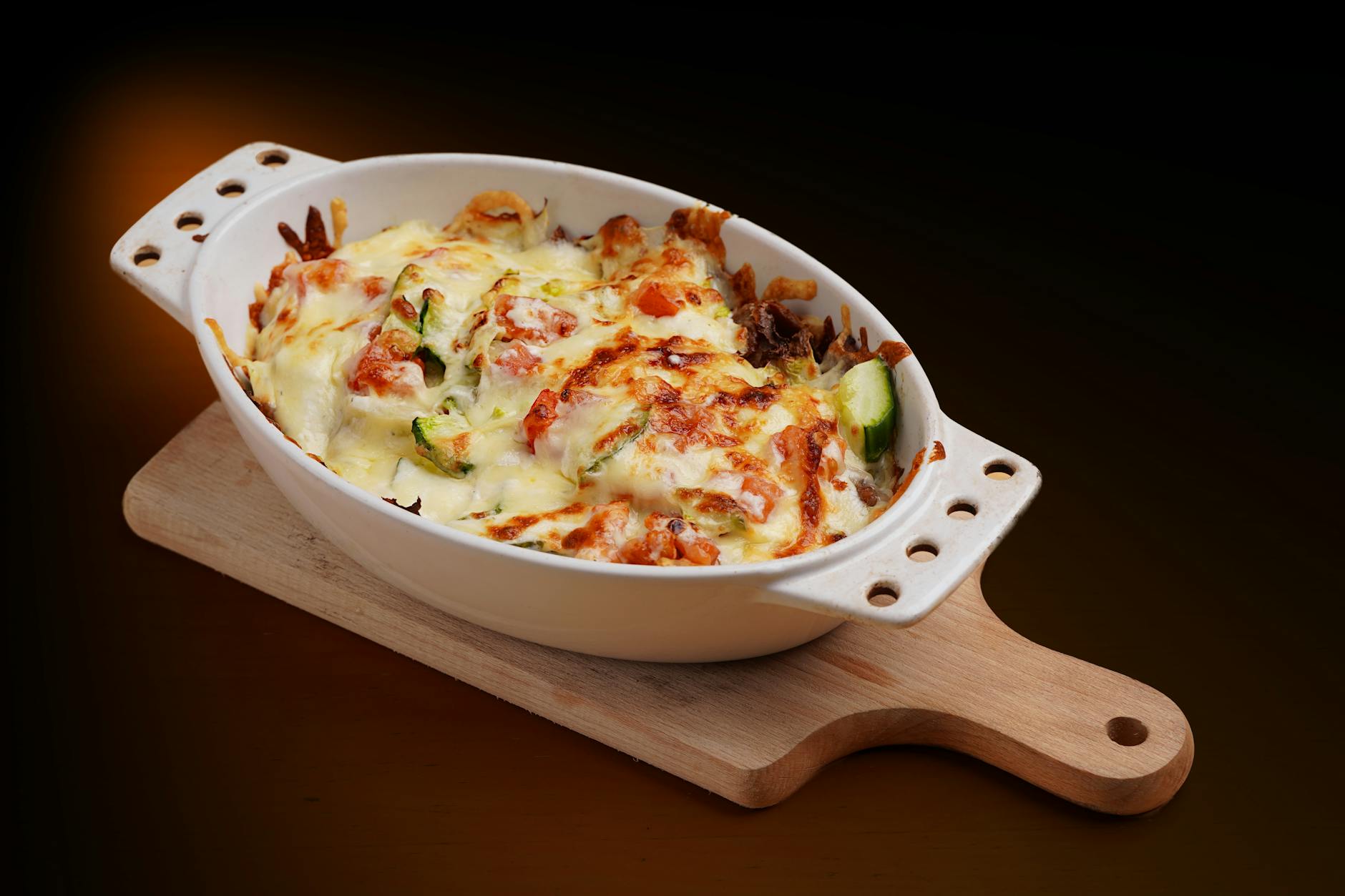
This Swiss chard gratin takes just under an hour to make, with 20 minutes of preparation and 35 minutes of cooking, and serves 4. The blanched stalks and wilted leaves pair with a lightly nutmeg-scented béchamel, under a golden Gruyère crust.
To get this dish right every time, drain the cooked chard thoroughly before mixing it with the béchamel, go easy on the salt in the blanching water for the stalks (they absorb a lot of it), and bake in a hot oven to get a golden crust without drying out the inside.
Ingredients
- 1 kg Swiss chard (stalks and leaves)
- 40 g butter
- 40 g flour
- 50 cl whole milk
- 100 g grated Gruyère
- 1 garlic clove
- 1 pinch grated nutmeg
- Salt, pepper
- 1 drizzle olive oil

Step-by-step recipe
- Prepare the chard. Rinse the stalks and leaves in clean water. Separate the white stalks from the green leaves with a knife, following the central rib.
- Blanch the stalks. Cut the stalks into 3 cm pieces. Plunge them for 8 minutes into a large pan of lightly salted boiling water, until tender when pierced with the tip of a knife.
- Cook the leaves. Meanwhile, finely shred the green leaves. Wilt them for 5 minutes in a frying pan with a drizzle of olive oil and the crushed garlic clove, over medium heat, until they release their water.
- Drain. Drain the stalks and leaves thoroughly, squeezing them in your hands or in a clean tea towel to remove as much water as possible.
- Make the béchamel. Melt the butter in a saucepan, add the flour all at once and cook for 1 minute, stirring. Off the heat, gradually pour in the milk, whisking constantly to prevent lumps.
- Thicken. Return to low heat and cook for 5 minutes, stirring, until the béchamel coats the spoon. Season with salt and pepper, and add the nutmeg.
- Assemble. Mix the drained chard with the béchamel in a buttered gratin dish. Sprinkle with grated Gruyère.
- Bake. Bake for 20 to 25 minutes at 200°C (thermostat 6 or 7), until the top is golden and slightly crisp.
Chef's tip
The secret to a good Swiss chard gratin lies in the draining. Cooked stalks and leaves hold a lot of water, and if it ends up in the dish, the béchamel thins out and the gratin turns runny as it bakes. Squeezing the chard in a clean tea towel, as you would with spinach, really makes a difference. For an even more golden crust, put the dish under the grill for 2 minutes at the very end of cooking, keeping a close eye on it so the Gruyère does not burn.
For a change
- Pan-fried Swiss chard with garlic and lemon: no béchamel, just the leaves and stalks sautéed in a pan with garlic and a squeeze of lemon juice, as a quick side for meat or fish.
- Light Swiss chard stalk gratin with Parmesan: replace the Gruyère with grated Parmesan and lighten the béchamel with half milk, half vegetable stock.
- Middle Eastern style Swiss chard: cook the stalks with cumin, preserved lemon and a touch of harissa for a more fragrant dish, served with couscous.
- Creamed Swiss chard leaves, like creamed spinach: wilt only the leaves in a pan, then bind them with thick crème fraîche, exactly like creamed spinach.
Frequently asked questions
Do you need to peel Swiss chard stalks before cooking them?
No need if they are young and tender, a simple rinse is enough. For thicker, more fibrous stalks, remove the strings with a vegetable peeler, as you would with celery, before cutting and blanching them.
How do you store Swiss chard gratin?
It keeps for 2 days in the fridge in a covered dish. Reheat it in the oven at 180°C for 15 minutes to get the crispy top back. Avoid the microwave, which softens the gratin crust.
Can you replace Swiss chard with spinach in this recipe?
Yes for the leaves, reducing the pan cooking time to 2 or 3 minutes. The stalks, however, have no equivalent: they bring a tender bite that spinach cannot replace.
In the kitchen with the right apron
Between the blanching water for the stalks and the béchamel splashing from the whisk, this kind of recipe puts an apron to the test. A good gardening apron protects you just as well in the vegetable patch as at the stove, and a classic kitchen apron is perfect for this gratin.
Le Tablier du Chef, kitchen and work aprons, online.


